Feel Into: Maya Irving

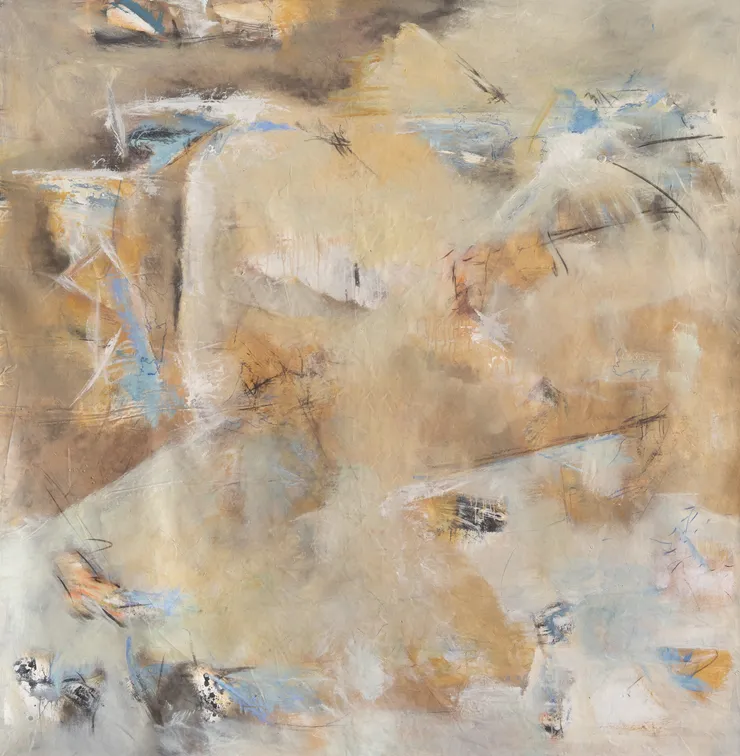
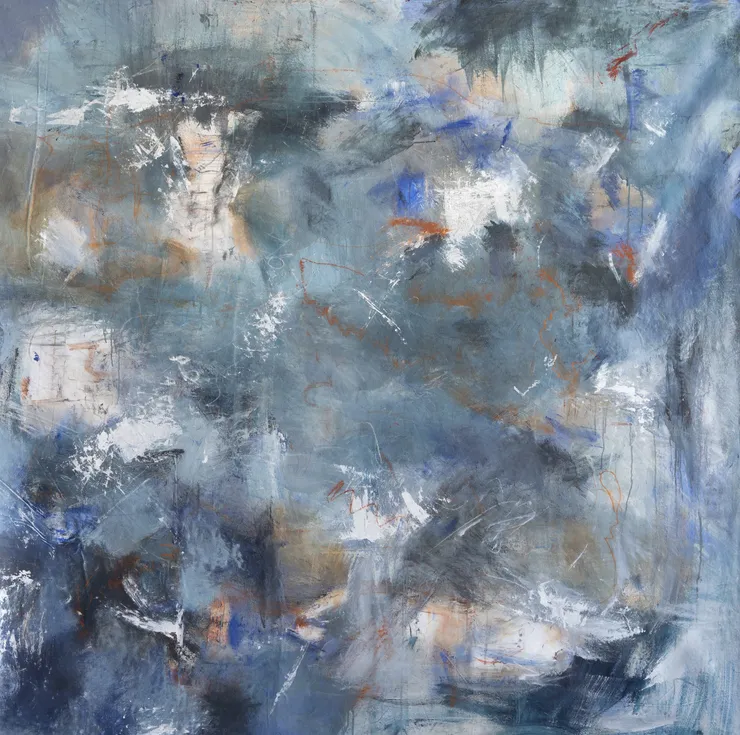
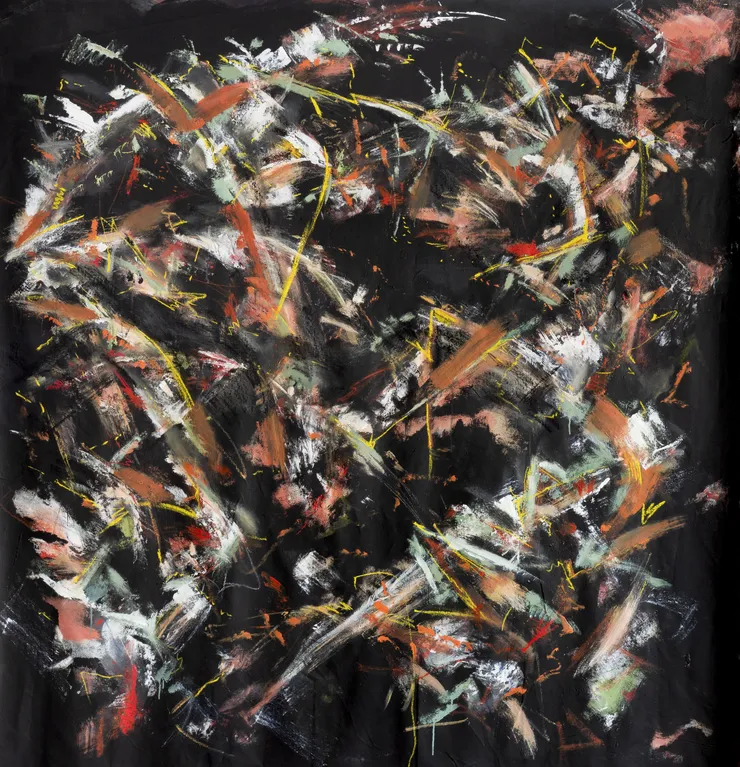
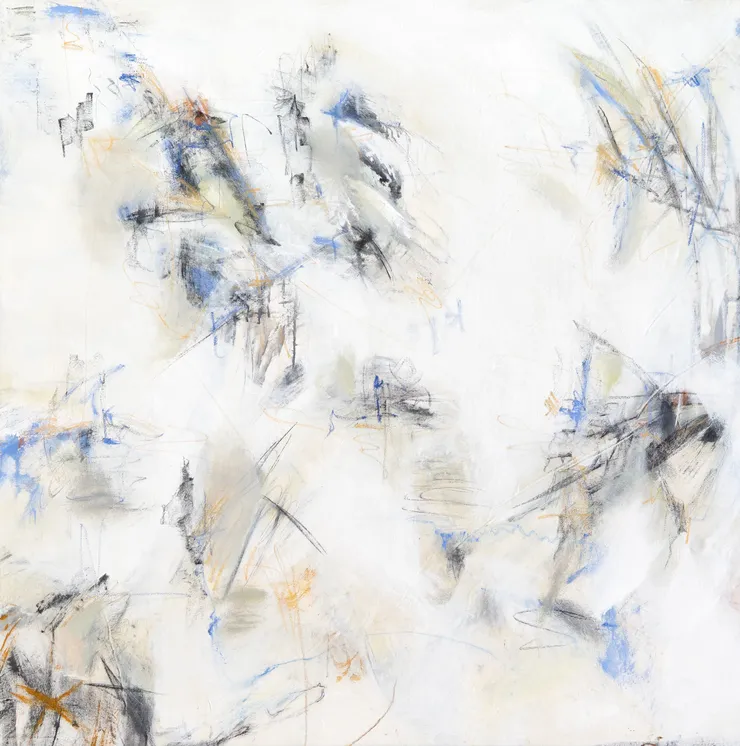
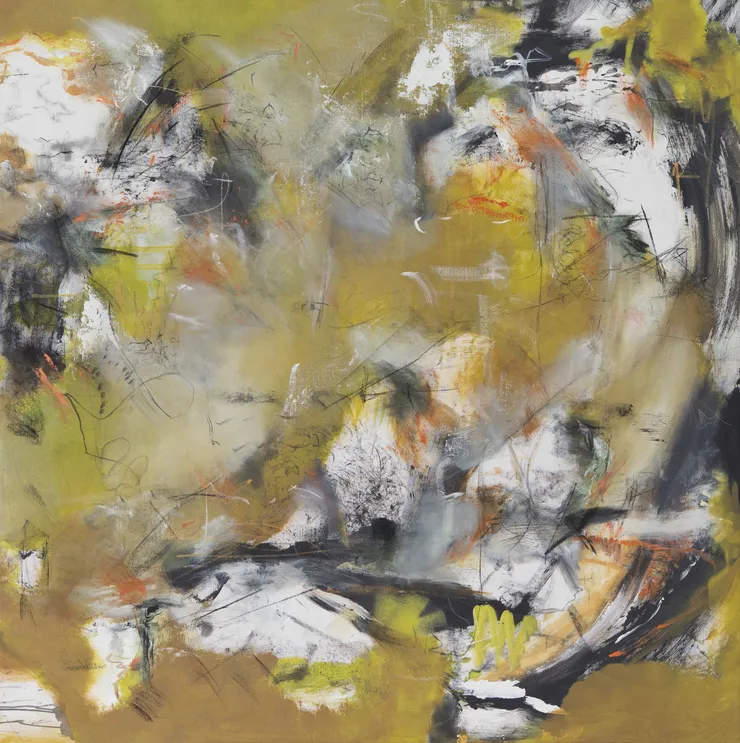
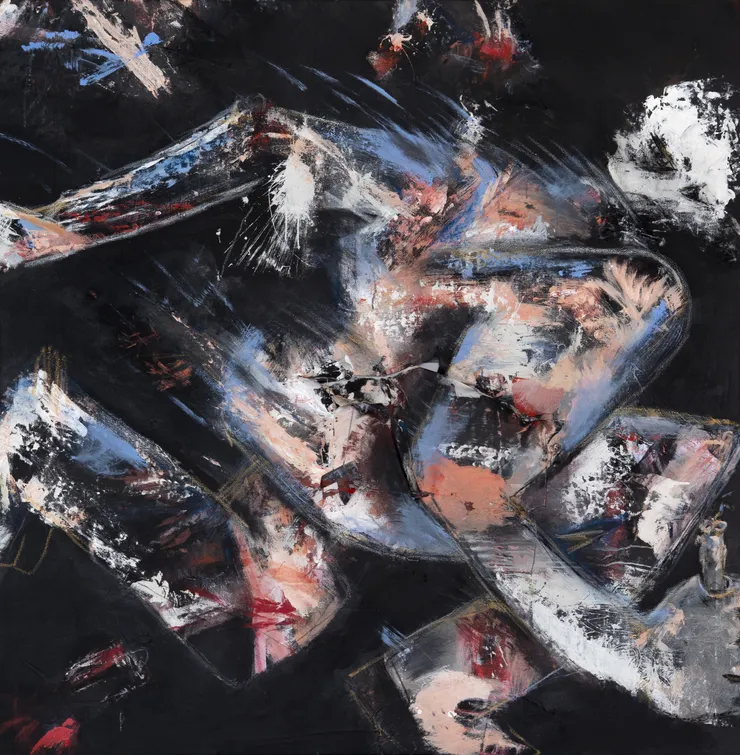
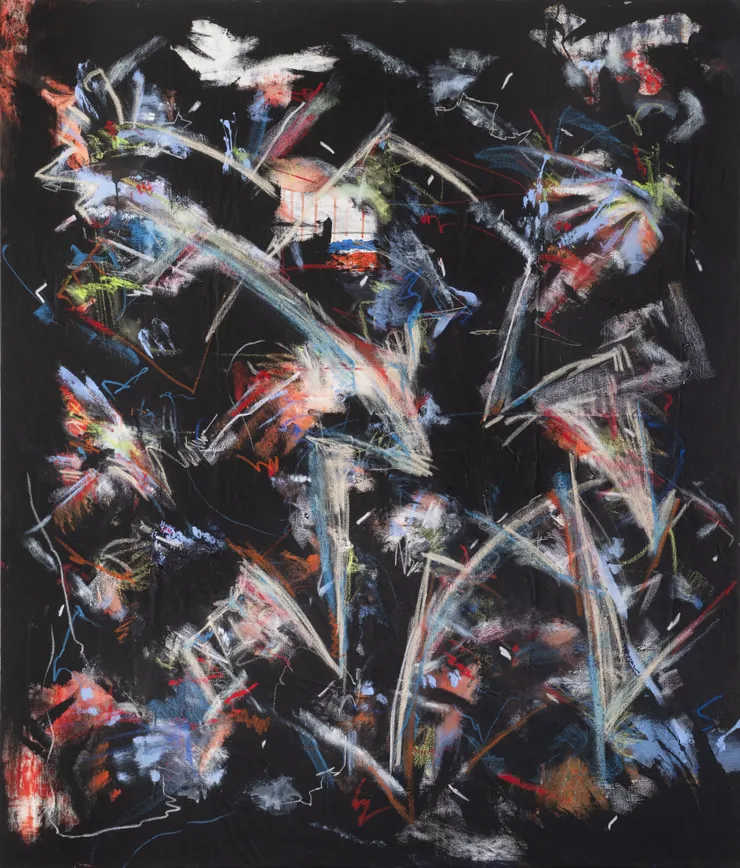
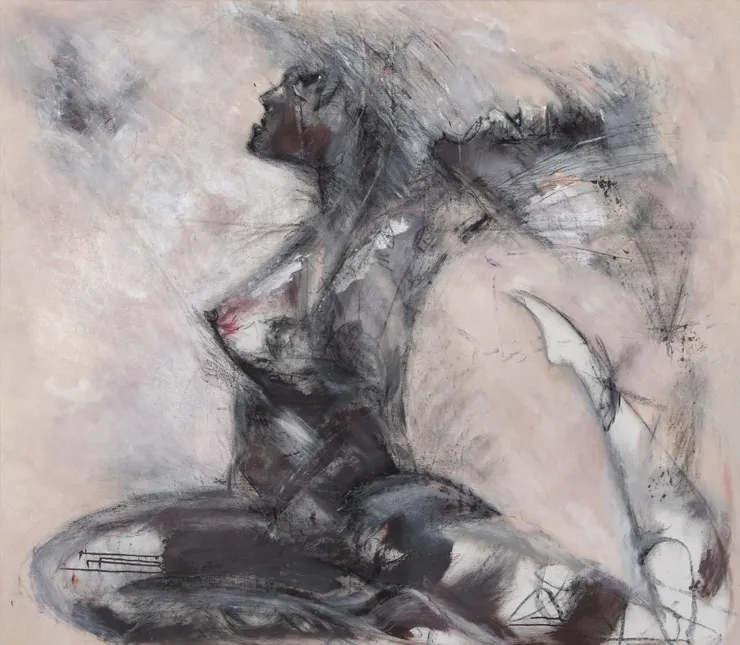
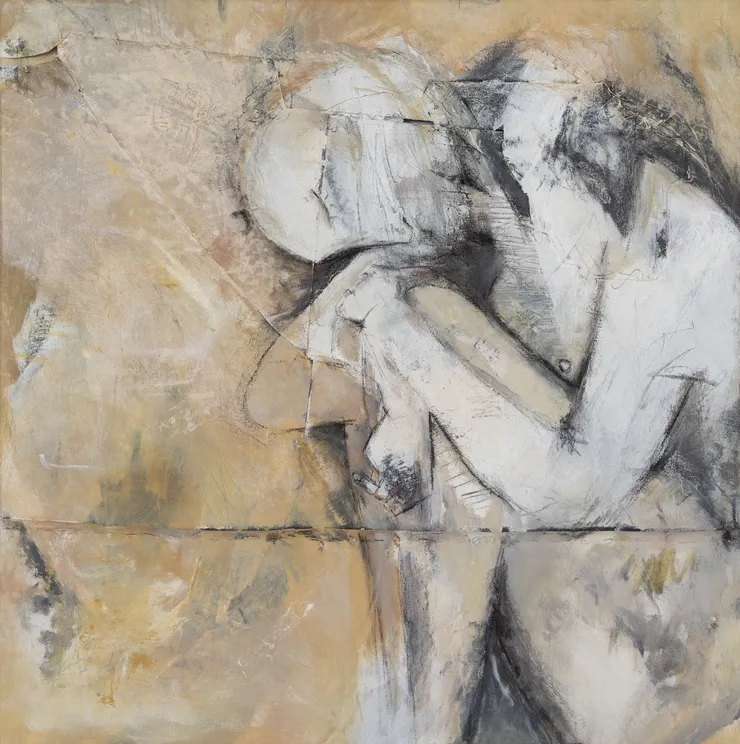
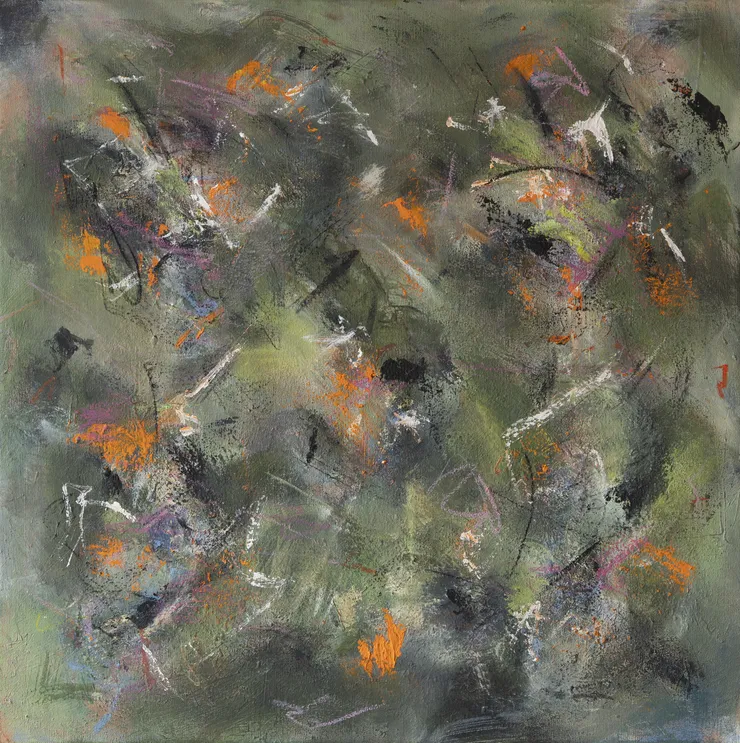
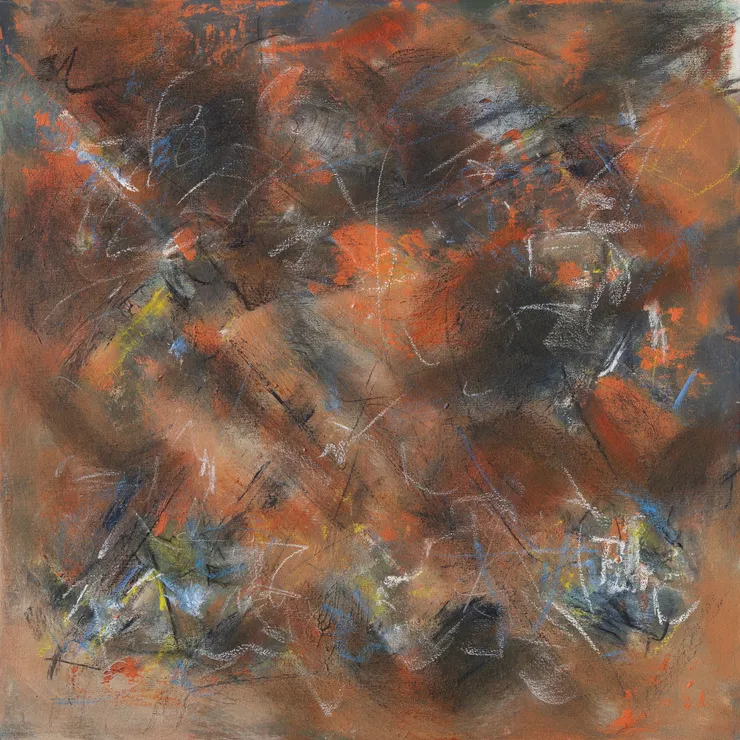
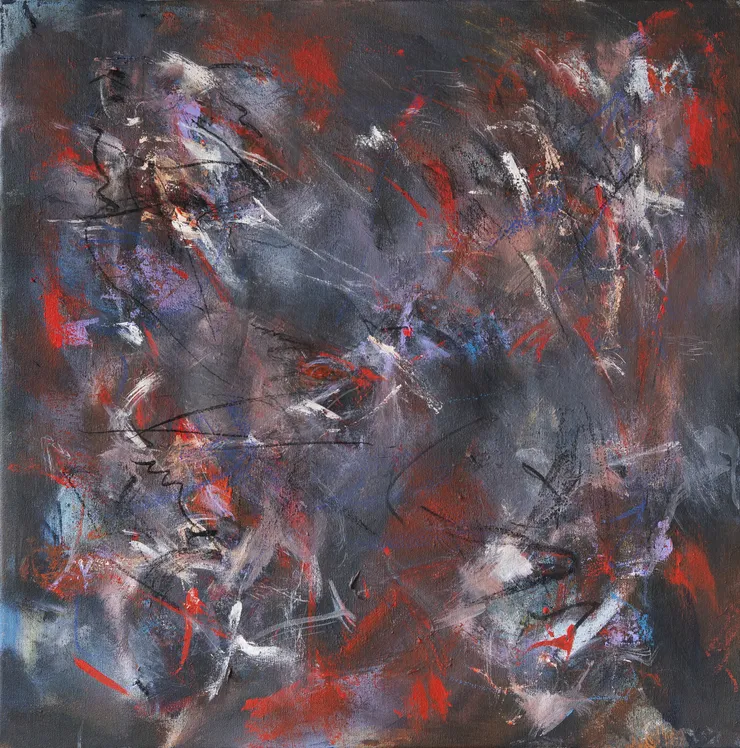
This body of work by Maya Irving emerges from a practice grounded in catharsis and the gradual processing of deeply embedded emotions. Developed during a residency at the gallery in February 2026, the works reflect an intensive period of reflection, performance, and physical mark making.
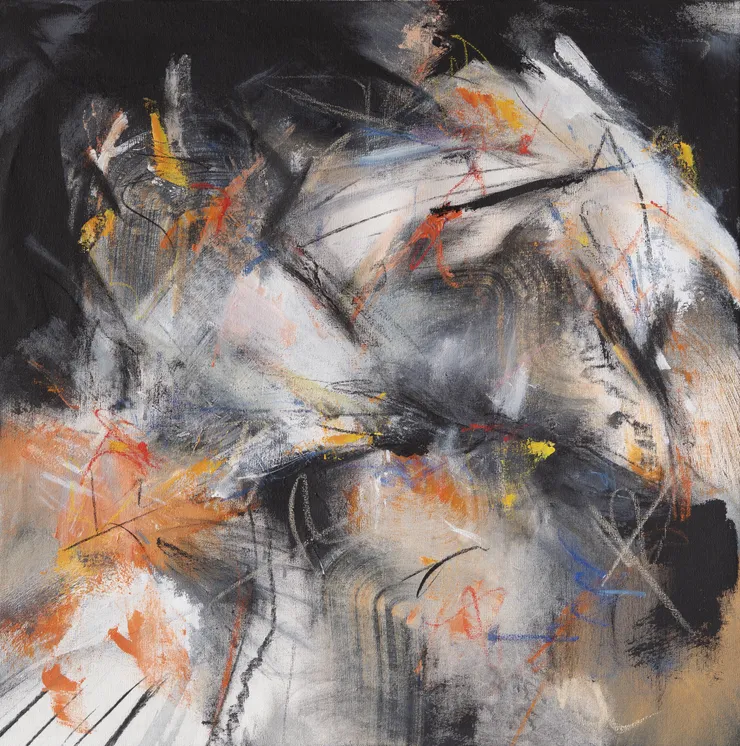
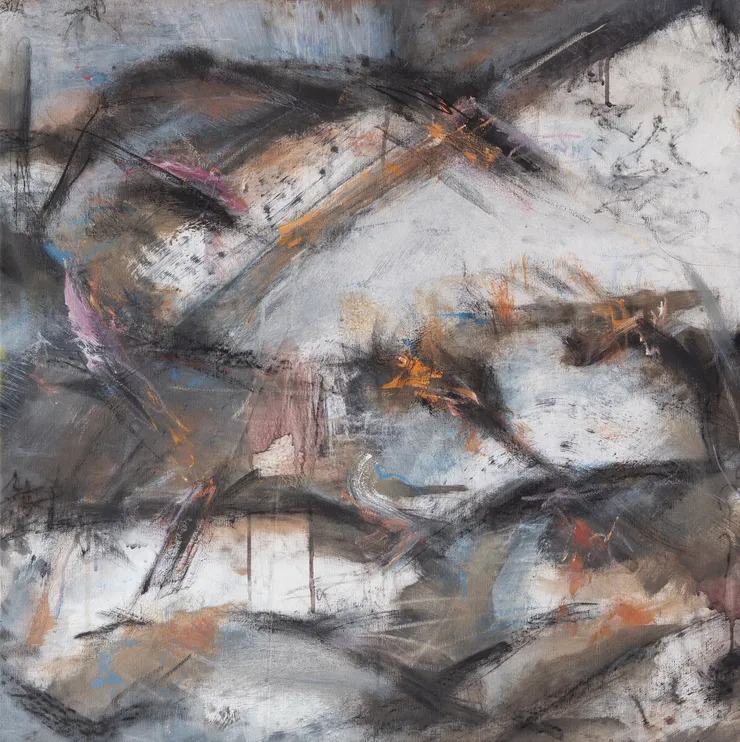
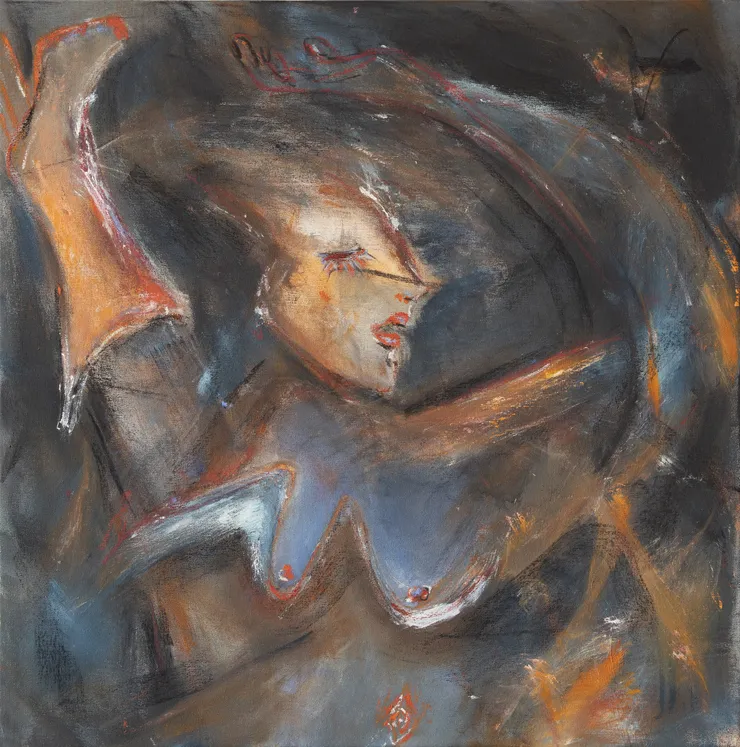
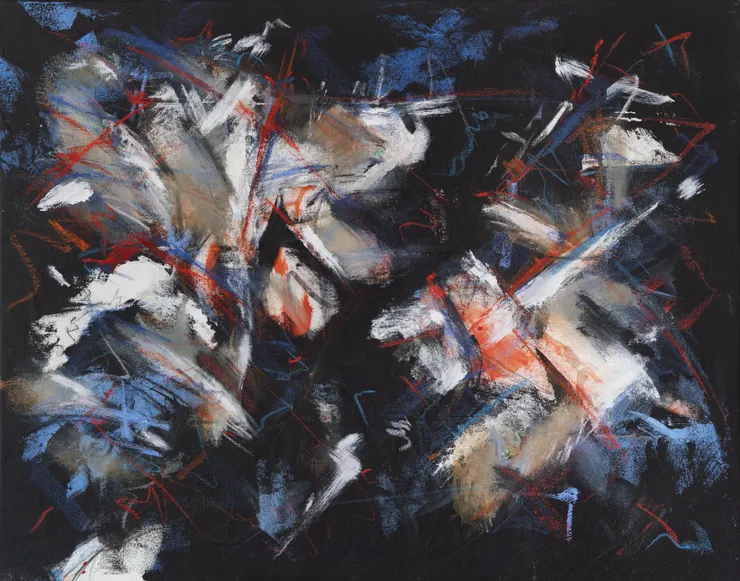
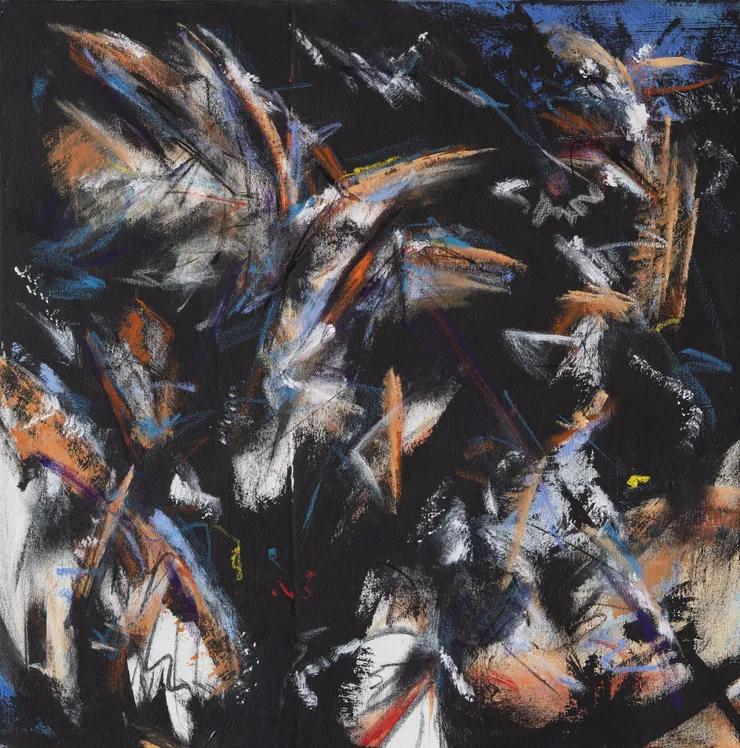
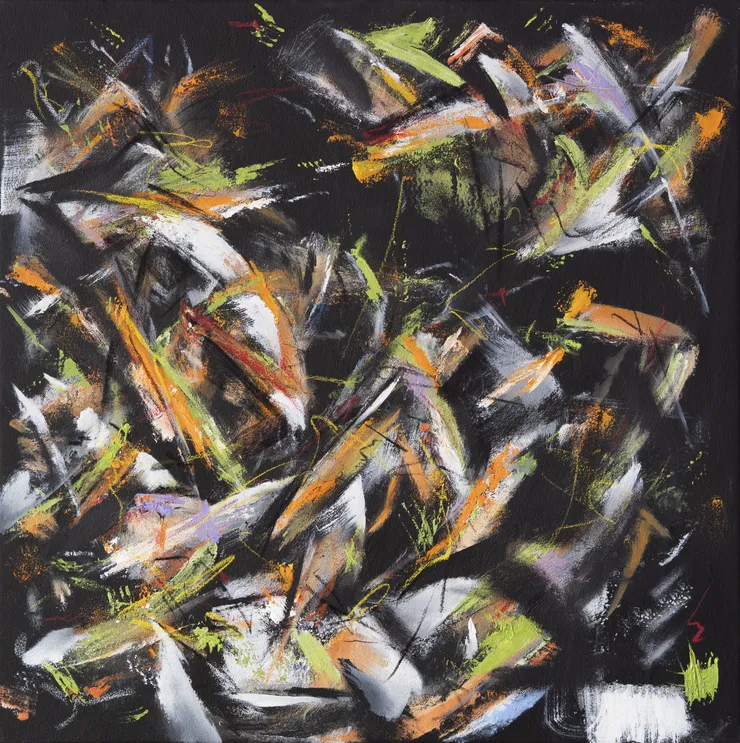
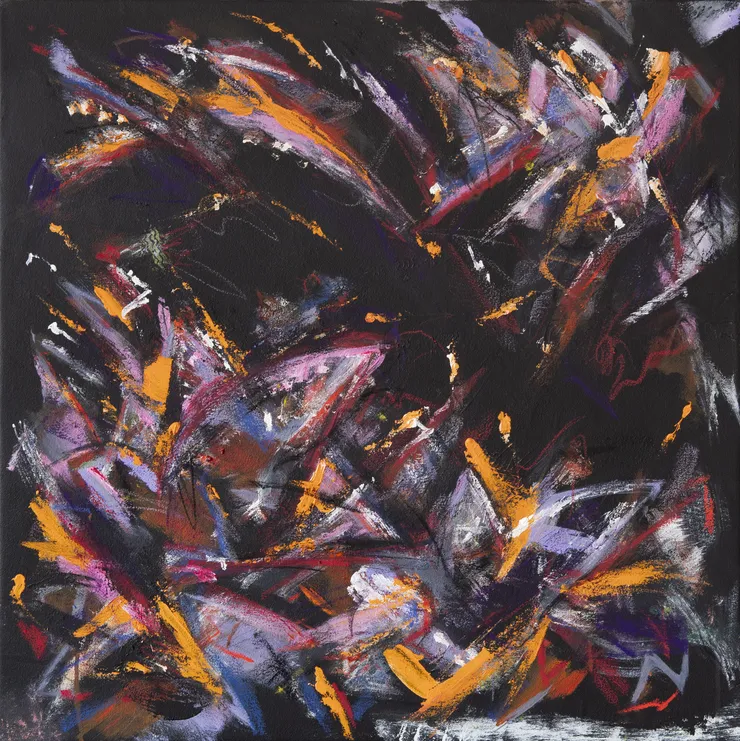
Irving's practice is shaped by an intuitive dialogue between body, memory, and environment. Each work begins with a performative act: the artist, blindfolded, produces an initial charcoal drawing that functions as an "emotional map", allowing internal states to surface without the mediation of sight. These first gestures register the immediacy of bodily movement and the subconscious articulation of feeling.
Irving describes her creative process not as a series of deliberate decisions but as an embodied knowing. Movement, gesture, and mark making emerge from the body before they are understood intellectually, allowing intuition to guide the development of each work. In this sense, painting becomes both a method of inquiry and a form of communication with forces that lie beyond rational explanation.
From this foundation, the surface is developed through repeated mark making. Lines, gestures, and painterly interventions accumulate over time each responding to particular thoughts or emotional impulses. Through this layered process, the works become sites of sustained negotiation between memory, sensation, and release. Rather than depicting emotion directly, Irving's practice operates through the physical act of drawing and painting itself, where repetition, erasure, and accumulation gradually transform intense internal states into visual form.
Underlying this body of work is a profound experience of personal loss. The passing of the artist's mother became a pivotal moment through which earlier experiences in Irving's life were reframed, revealing what she describes as an intuitive force that had long guided her toward artistic practice. In this context, the gallery became a space where grief, intuition, and reflection converge. Through painting, the artist returns repeatedly to breath, presence, and the rhythms of the natural world, seeking moments of clarity within the complexity of mourning.
Nature and imagination play a significant role in this dialogue. For the artist, the natural world becomes a site where memory and presence coexist, and where grief can be re-encountered as connection rather than absence. These sensibilities resonate throughout the works, which operate less as representations of emotion and more as records of an evolving internal landscape.
Together, the paintings function as accumulative emotional fields, where layers of gesture and material trace a movement from intensity toward resolution. Through the slow, repetitive processes of drawing, covering, and reworking, Irving transforms private experience into a shared visual language of release, resilience, and catharsis.
-
 Maya Irving, To Grieve in the Slip of Peace, 2026AU$ 5,400.00
 -
Maya Irving, Lucid Periphery, 2026AU$ 5,400.00
-
Maya Irving, But Now a Leopard, 2026AU$ 5,200.00
-
Maya Irving, Iridescent Dignity, 2026AU$ 4,800.00
-
Maya Irving, Soft Catastrophe, 2026AU$ 4,800.00
-
Maya Irving, Guilty as Charged, 2026AU$ 4,400.00
-
Maya Irving, Deathless Audio, 2026AU$ 3,600.00
-
Maya Irving, Bleeding Heart Devotion or to Lose in the Wake of Opening?, 2026AU$ 3,800.01
-
Maya Irving, The Salt on Her Cheeks, 2026AU$ 1,800.00
-
Maya Irving, Erosion in Bloom, 2026AU$ 980.00
-
Maya Irving, Silence of Your Resting State, 2026AU$ 980.00
-
Maya Irving, Infrared Pulse, 2026AU$ 980.00
-
Maya Irving, Hushed Abyss, 2026AU$ 980.00
-
Maya Irving, Shape of You, 2026AU$ 980.00
-
Maya Irving, Respectfully Fuck Off, 2026AU$ 980.00
-
Maya Irving, Luminous Faultlines, 2026AU$ 1,100.00
-
Maya Irving, Crystal Gaze, 2026AU$ 980.00
-
Maya Irving, Night Fright, 2026AU$ 980.00
-
Maya Irving, Ultraviolet, 2026AU$ 980.00